
30 Oct 2026
‘I don’t want anyone to feel alone’ – Fighting for justice after attacks on ambulance workers
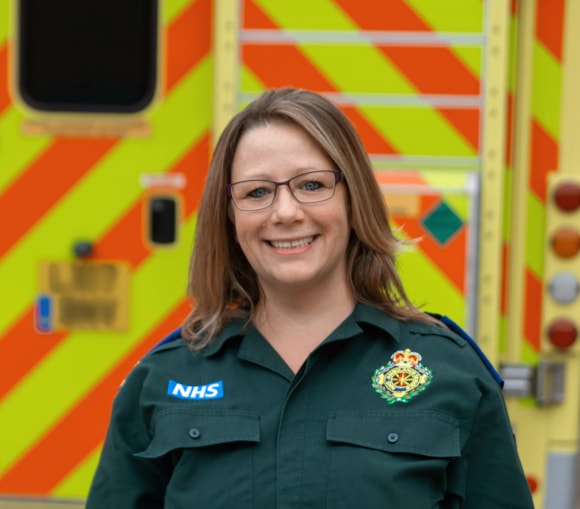
Ambulance crews and call handlers face abuse and aggression while trying to help others. For Violence Reduction Manager Louise Murray, helping colleagues through the aftermath is personal.
Before this role, I worked on ambulances. On one call, a patient became aggressive, threatened my crewmate and me, and refused to let us leave his home. I radioed for police help.
The patient locked us in his home and we were trapped for more than 15 minutes before someone else inside the property opened the front door. I got my crewmate out first, then ran after her as police arrived.
But escaping the house wasn’t the end of it.
The effects stayed with me long afterwards, and things can still trigger those feelings. This happened years ago, but at the time I felt there was nobody who could help me through it.
That experience is part of why I do this job today.
When an ambulance crew or call handler is abused, the impact can last long after the incident itself. And when a police investigation stalls or a case is closed, getting answers can feel like another battle.
Now colleagues can turn to me and our team to help them through that process.
One team – 640 cases
London Ambulance Service was the first ambulance trust to introduce a Violence Reduction Unit five years ago – a team I helped to launch.
We're now supporting colleagues through around 640 active police investigations – across all our teams throughout London. Each represents an incident that someone has had to deal with, and keeping track of those cases and following up concerns is a significant part of my day.
Most days begin with new reports, emails and enquiries from ambulance crews, emergency control room staff and 111 colleagues. The team reviews every report to understand what happened, identify any immediate support needs and see whether we need more information.
My day might involve speaking to a colleague about what happened or helping identify evidence and do whatever is needed to progress those 640 police investigations. Colleagues make their own reports to police; we help them understand the process. With their consent, I can seek updates and raise concerns about an investigation, but the police direct it.
Abuse is not part of the job
Earlier this month, paramedic Gosha Graf's story hit the headlines.
I worked on the case when she was sexually assaulted by a patient. She reported it to the police and the man was jailed for 18 weeks.
Ambulance crews and call handlers report sexual abuse every single day.
But many of these incidents go unreported. Part of my job is helping colleagues recognise when a crime may have been committed and understand their options for reporting it.
Reporting is only the beginning
If a case is closed and I believe there are grounds to reopen it, I can ask police to review the decision, with the colleague’s consent.
One case I worked on had been closed and appeared to be going nowhere. I kept pursuing it, raising it with different inspectors. Eventually it reached the Crown Prosecution Service and led to a conviction.
Abuse can have a devastating impact. Last week, London Ambulance Service shared the story of a 111 health advisor who needed therapy after a sexually abusive call.
Not every case ends in a conviction. Whatever the outcome, I want colleagues to feel heard, understand their options and know they have support throughout the process if they ask for it.
After nearly 25 years on the frontline and in violence reduction, I’m clear that abuse and aggression are not part of the job.
I don’t want anyone to feel alone.
Contact Information
London Ambulance Service Media Team
London Ambulance Service NHS Trust
020 3267 4440
londamb.press.office@nhs.net
Notes to editors
Picture is Louise Murray
About London Ambulance Service
London Ambulance Service answers more 999 and 111 calls than any other ambulance service in the UK. Our ambulance crews go to more than 1 million patients and our call handlers answer more than 1.9 million 999 calls a year.*
Our 24-hour 111 integrated urgent care services help more than 2.2 million patients a year and cover most of London.
We have a core fleet of nearly 600 ambulances. Paramedics also respond in fast response cars, on motorcycles, on bicycles and by helicopter, working with our partners at London’s Air Ambulance.
We have more than 10,000 people who work for us, caring for the nine million people who live or work in the city and all those who visit us.
Our partnerships with the Metropolitan Police Service, London Fire Brigade and London’s Resilience Forums mean we are ready and prepared to respond to major incidents; and ensure we keep Londoners safe.
*All the statistics used are correct for the year 2023/24 and have been published in our latest annual report which you can find here: https://www.londonambulance.nhs.uk/about-us/our-publications/

Powered by Onclusive PR Manager © 2026